Sync
Daily Multivitamin
Omega-3
Brain & Heart Health
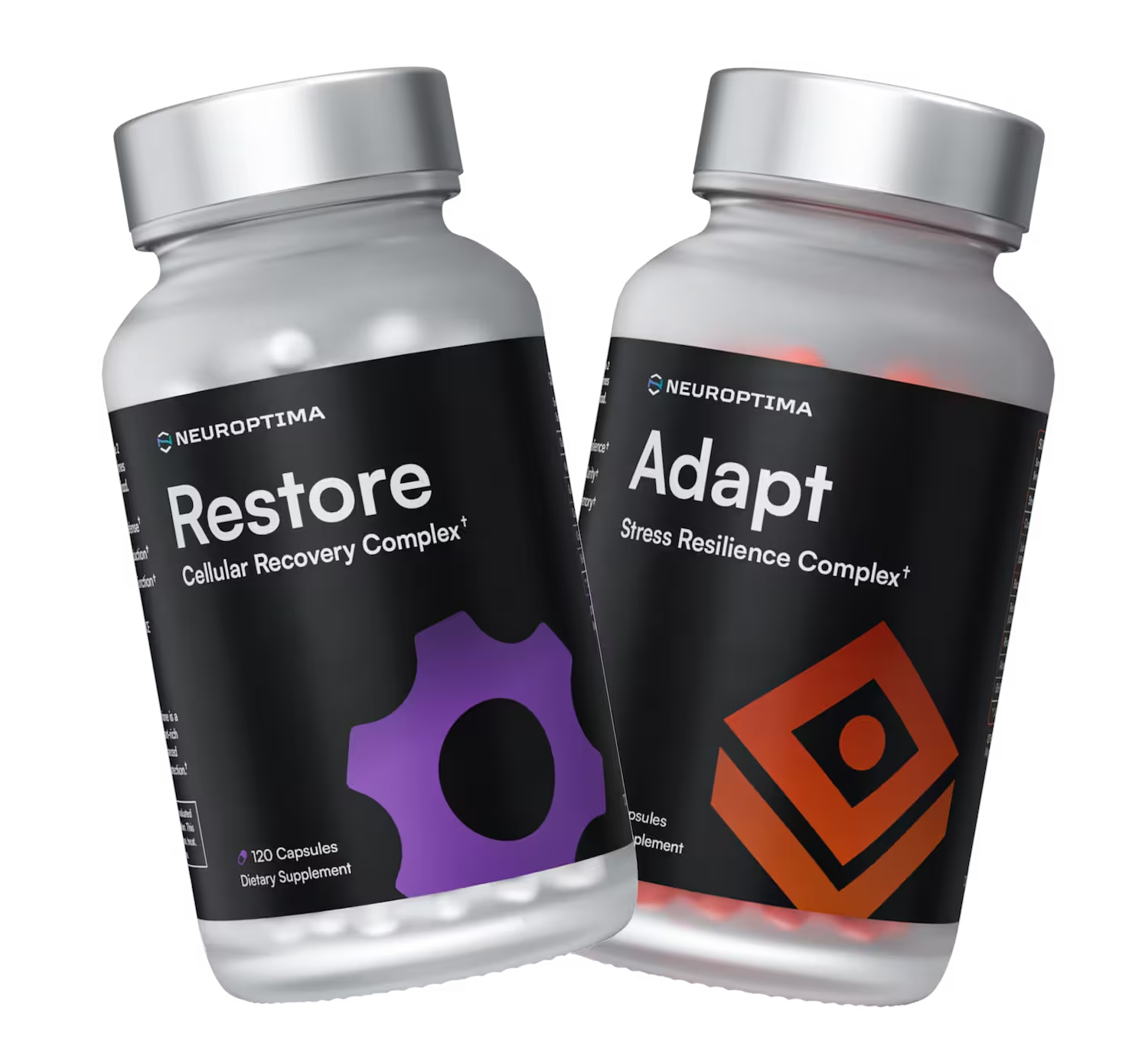
Adapt
Stress & Resilience
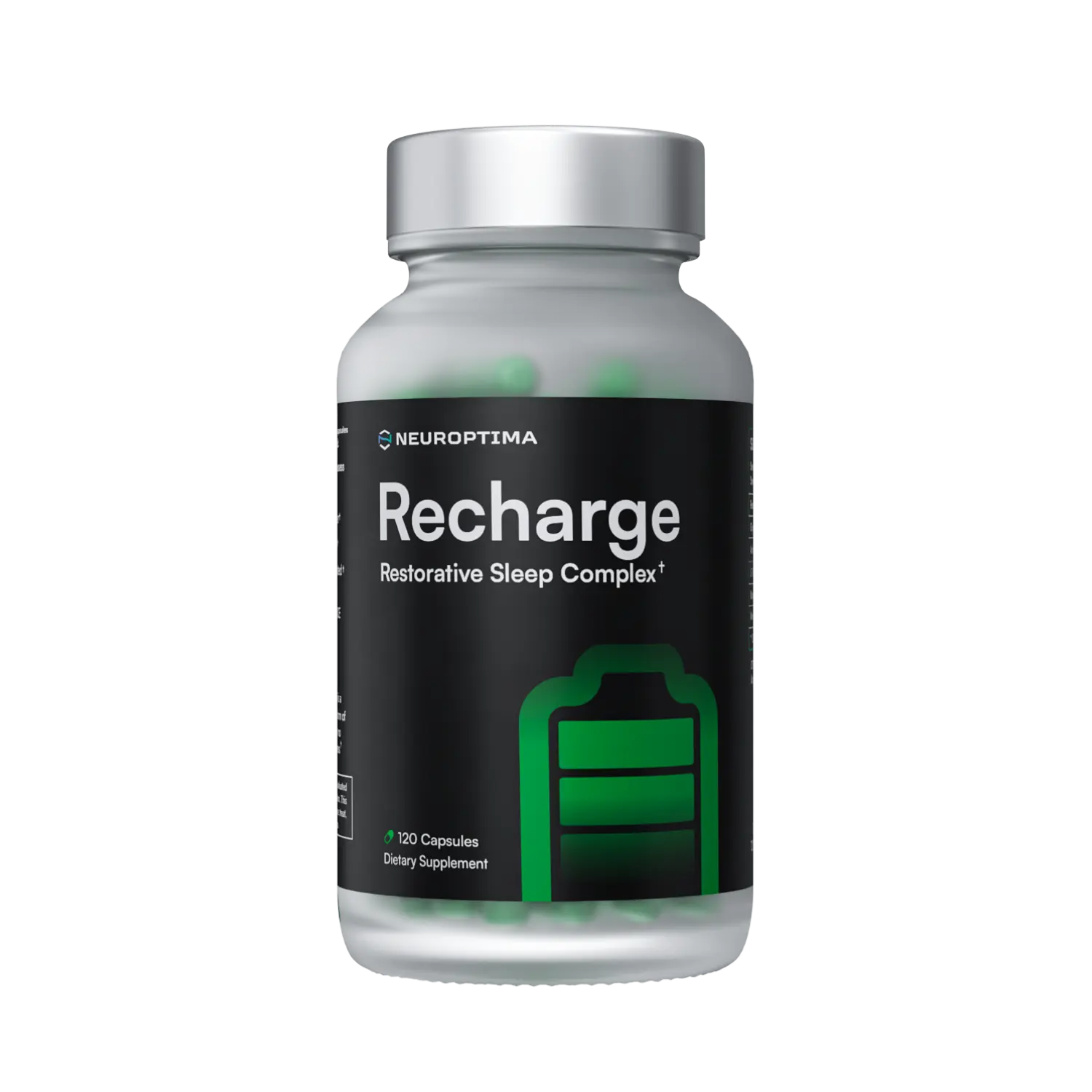
Recharge
Restorative Sleep Complex
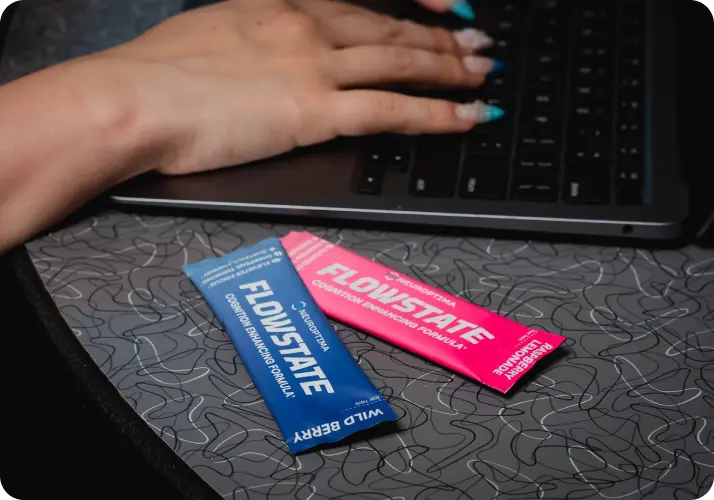
Flow State
Energy & Focus
Neurolytes
Hydration & Performance
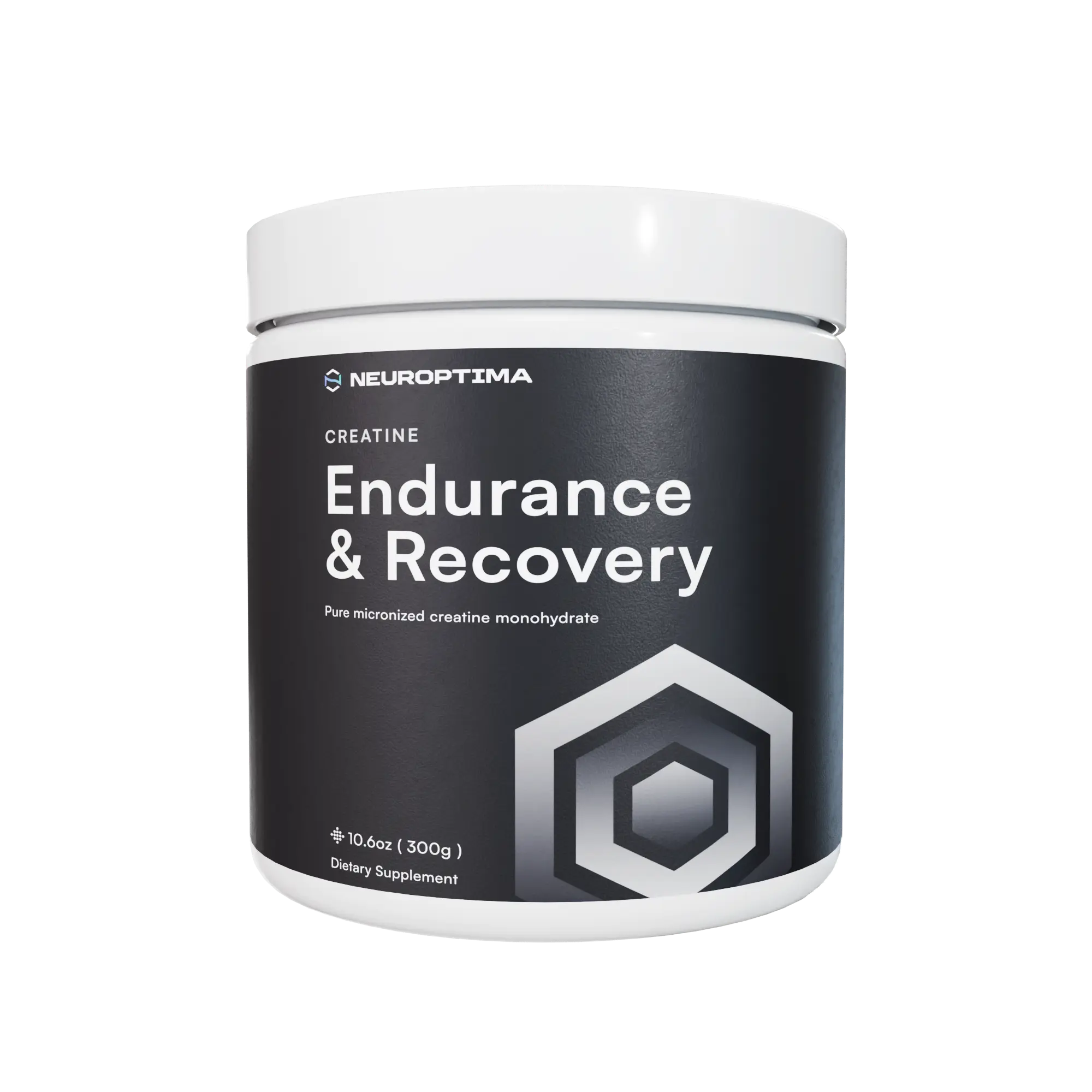
Creatine
Ultra-Fine Powder | 200 Mesh
Restore
Cellular Recovery Complex
Health Baseline
Essential Health Bundle
Around The Clock
Sleep & Energy Balance
Mental Recovery
Restore & Adapt Stack
Physical Performance
Performance & Recovery Stack


Sync
Daily Multivitamin
Omega-3
Brain & Heart Health
Adapt
Stress & Resilience
Recharge
Restorative Sleep Complex
Flow State
Energy & Focus
Neurolytes
Hydration & Performance
Creatine
Ultra-Fine Powder | 200 Mesh
Restore
Cellular Recovery Complex
Health Baseline
Essential Health Bundle
Around The Clock
Sleep & Energy Balance
Mental Recovery
Restore & Adapt Stack
Physical Performance
Performance & Recovery Stack



Sync
Daily Multivitamin
Omega-3
Brain & Heart Health
Adapt
Stress & Resilience
Recharge
Restorative Sleep Complex
Flow State
Energy & Focus
Flow State
Energy & Focus
Creatine
Ultra-Fine Powder | 200 Mesh
Restore
Cellular Recovery Complex
Health Baseline
Essential Health Bundle
Around The Clock
Sleep & Energy Balance
Mental Recovery
Restore & Adapt Stack
Physical Performance
Performance & Recovery Stack
Competitive gaming has always had a relationship with stimulants, focus enhancers, and anything that promises sharper energy, focus, and reaction times. Which is why it’s no surprise there has been an overwhelming amount of players using nicotine products while gaming, the uncomfortable reality is this: nicotine can be a performance-enhancing compound.
The research on that is decades old. Cannabis is also extremely common in esports environments, particularly among players dealing with stress, burnout, anxiety, and sleep disruption.
But this conversation only gets useful when we stop moralizing and start talking about cognitive performance metrics. What actually improves focus? What destroys reaction time? What helps in a scrim versus what sabotages a best-of-five series halfway through? That's the lens Neuroptima's Director of Performance Casey Thomas, MS, RDN, uses when breaking down what the research actually shows and what it means for how you play.
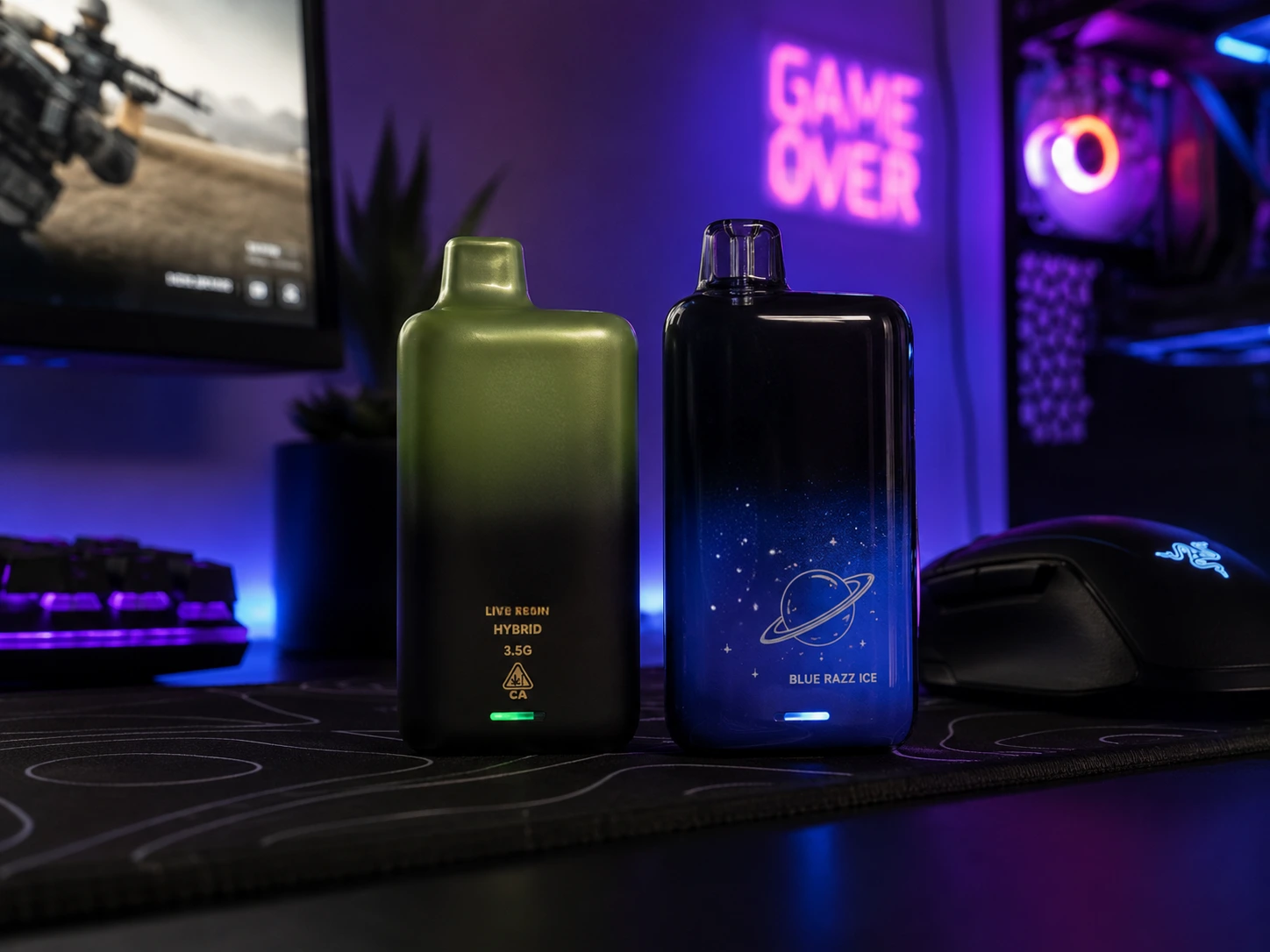
Spend enough time around competitive gaming environments, and you’ll notice patterns quickly. Nicotine pouches, vapes, cannabis pens, gummies, and late-night “wind down” habits are deeply embedded in many esports ecosystems. Players are constantly chasing consistency under pressure for:
That pursuit is understandable. High level esports athletes operate in environments where cognitive performance matters every second, and stress is high. Furthermore, a slight dip in focus or psychomotor performance can lose a round, a match, or an entire tournament run.
Nicotine, in particular, became popular because players noticed immediate effects. Cannabis became common for a different reason entirely: stress reduction and sleep support. But those two compounds operate very differently once you actually examine the data instead of the internet mythology surrounding them.
Nicotine is one of the rare compounds that consistently demonstrates acute cognitive enhancement even in elite performers.
That matters because most nootropic compounds show their strongest effects in aging populations or cognitively impaired individuals. Nicotine is unusual because measurable performance benefits still appear in young, healthy, highly trained subjects.
Researchers studying professional archers found that nicotine use improved psychomotor performance and cognitive metrics under controlled conditions. The archery example is especially important because elite archers already operate near their cognitive ceiling.
Seeing measurable improvements, there is compelling evidence that nicotine genuinely alters performance. Historically, some of the earliest observations around nicotine’s cognitive effects come from psychiatric inpatient settings, where clinicians noticed temporary improvements in attention and mental state following nicotine exposure.
That observation helped drive decades of additional research into nicotine’s effects on arousal, concentration, and psychomotor processing.
And yes, in the short term, nicotine works. Acute nicotine intake can temporarily improve:
That’s why so many players swear by it before ranked sessions or tournaments. But this is where the internet usually stops the conversation. The actual caveats are where things get complicated.
Nicotine only works reliably when the user is nicotine-sensitive. That single detail changes everything.
A habituated user doesn’t keep receiving the same cognitive enhancement. Instead, tolerance develops quickly, meaning the player eventually stops getting the performance edge while still carrying the addiction risk burden and withdrawal risk.
In practical terms, the player who occasionally uses nicotine before a short duration, high focus task may experience a noticeable bump in performance. The player vaping constantly throughout the day probably won’t.
This is the same cycle that historically pushed cigarette smokers from one cigarette daily to entire packs over time. The brain adapts rapidly, and escalating dosage becomes necessary just to recreate the same effect. That creates a massive issue in esports environments.
Most esports players using nicotine are doing it through Vapes and Nicotine pouches. The problem is that vapes are wildly inconsistent delivery systems.
Research and practitioner observations show that nicotine intake per puff can vary dramatically, even between products from the same brand or cartridge type. In some cases, the variability exceeds a 10x difference in nicotine delivery.
For gamers, the easiest way to understand this is through caffeine. Imagine drinking a cup of coffee where the dose could randomly swing between 50mg and 500mg of caffeine.
That’s effectively what some players are doing with nicotine vapes. The result is inconsistent performance. Some sessions feel incredible. Others feel jittery, distracted, or cognitively flat. That inconsistency is the opposite of what elite competitors actually need.
Here’s the statistic most players underestimate: roughly one in three people who try nicotine become addicted.
That addiction risk ratio is higher than alcohol, cannabis, and even heroin in some comparative dependency analyses. The performance conversation changes completely once you understand that nicotine dependency itself becomes a cognitive liability.
Because the real issue isn’t simply addiction, it’s withdrawal. Nicotine withdrawal can impair:
And in fast metabolizers, withdrawal symptoms can appear shockingly quickly. That matters enormously in esports.
A player might feel excellent for the first 20 minutes after nicotine exposure. But if they enter a long scrim block, tournament bracket, or best-of-five series without another dose opportunity, the cognitive drop-off can become severe midway through competition.
Instead of gaining a performance edge, they’ve introduced a timed concentration crash directly into the middle of gameplay.
That’s why many esports organizations quietly deal with vape-break culture among players. The timing often aligns almost perfectly with withdrawal onset.
For players determined to experiment regardless of the risks, gum is probably the least problematic delivery method.
Why? Because it offers:
There’s also evidence that gum chewing itself can independently support cognitive performance and alertness. But even then, this is a narrow use case. Nicotine should never become:
The exact cadence that preserves nicotine’s cognitive effects is the same cadence that prevents addiction: infrequent use. And for most players, the risk-to-reward ratio simply does not hold up over time.
Chronic nicotine exposure also carries vascular consequences that may negatively impact long-term cognitive health and blood flow regulation, both of which matter heavily for sustained mental performance.
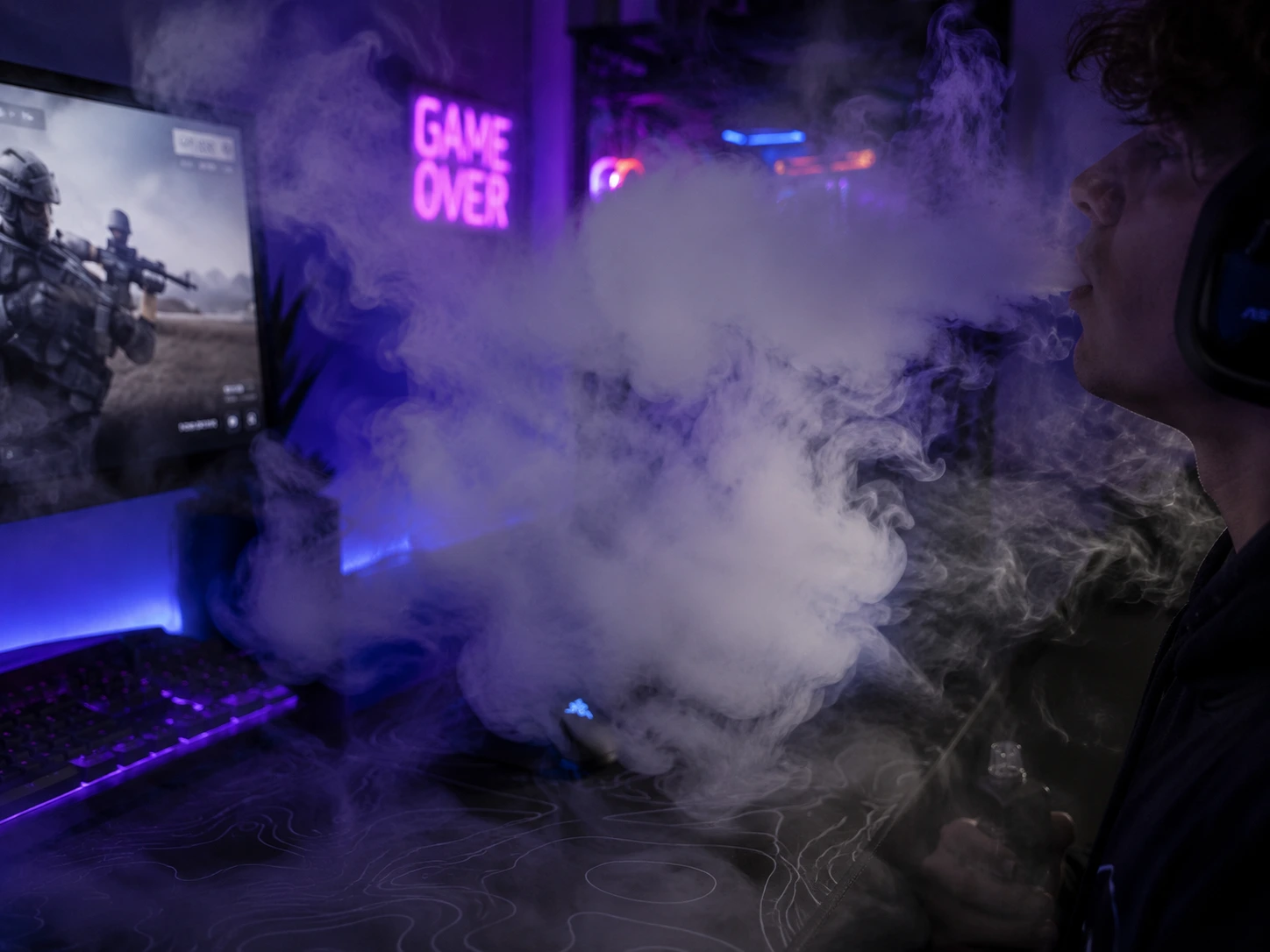
Cannabis is a completely different conversation. Unlike nicotine, cannabis does not improve acute gaming performance. In fact, the short-term data are remarkably consistent: cannabis impairs psychomotor performance. Studies examining acute THC exposure repeatedly show reductions in:
These impairments occur across both oral and inhaled cannabis delivery methods. That’s the part many gaming conversations avoid saying clearly. Cannabis relaxes the brain to the point that performance slows down.
And while some users describe feeling “locked in,” objective cognitive testing usually tells a different story.
Research examining both vaporized and oral cannabis found measurable cognitive impairment following THC administration. Additional studies also show impairments in attention, response speed, and motor coordination after cannabinoid exposure.
From a competitive standpoint, there is no compelling evidence supporting cannabis use before or during esports performance.
One nuance that matters here is understanding THC versus CBD. THC is the psychoactive component responsible for the “high” associated with cannabis. It is also the primary driver of acute cognitive impairment. CBD is different. It is generally associated with:
Products with higher CBD-to-THC ratios tend to produce less cognitive impairment than high THC products. But that does not mean they become performance enhancing. Higher CBD ratios simply make the impairment less severe.
There is, however, one realistic scenario where cannabis can indirectly improve performance. Some esports athletes genuinely struggle to decompress after long periods of hyperstimulation, scrims, ranked grinding, caffeine intake, and blue-light exposure.
In certain individuals, evening cannabis use may improve sleep onset and relaxation. And if sleep quality improves substantially, downstream cognitive performance the next day may improve as a result. That is a real practitioner-observed use case.
But it is still fundamentally a sleep intervention, not a gaming enhancer. Cannabis before gameplay remains a poor trade for anyone prioritizing:
To a degree, yes. Inhaled cannabis:
Edibles and oral ingestion:
But from a gaming performance perspective, the distinction doesn’t change much. Both methods can impair cognition for several hours after use. So while the pharmacokinetics differ, the practical recommendation stays the same.
Nicotine is one of the few compounds that genuinely improves acute cognitive performance metrics, even in elite performers. The problem is that real-world esports usage rarely resembles the tightly controlled conditions used in research.
Dosing inconsistency, rapid tolerance development, addiction risk, and withdrawal timing make nicotine extremely difficult to use strategically without eventually sabotaging performance consistency.
Cannabis is simpler: acutely, it impairs cognitive and psychomotor performance. The one legitimate esports use case is evening relaxation and sleep support in players who genuinely struggle to wind down after competition or training.
Most players using either compound casually are not accounting for the long-term tradeoffs, withdrawal timing, or performance inconsistency they introduce.
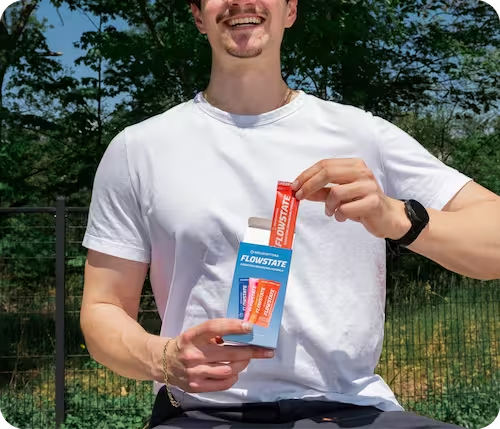
If you want a more consistent cognitive edge without the addiction curve, withdrawal liability, or dosing lottery associated with nicotine and gaming culture, Flowstate by Neuroptima is built specifically around stable focus, sustained energy, and performance-oriented nootropic support. For deeper reading on performance nutrition and cognitive enhancement, explore the educational resources available through Neuroptima’s Science page and for more exclusive performance program content check out our Discord.


.svg)